Why low-stakes roulette sessions hide the house edge better than slots
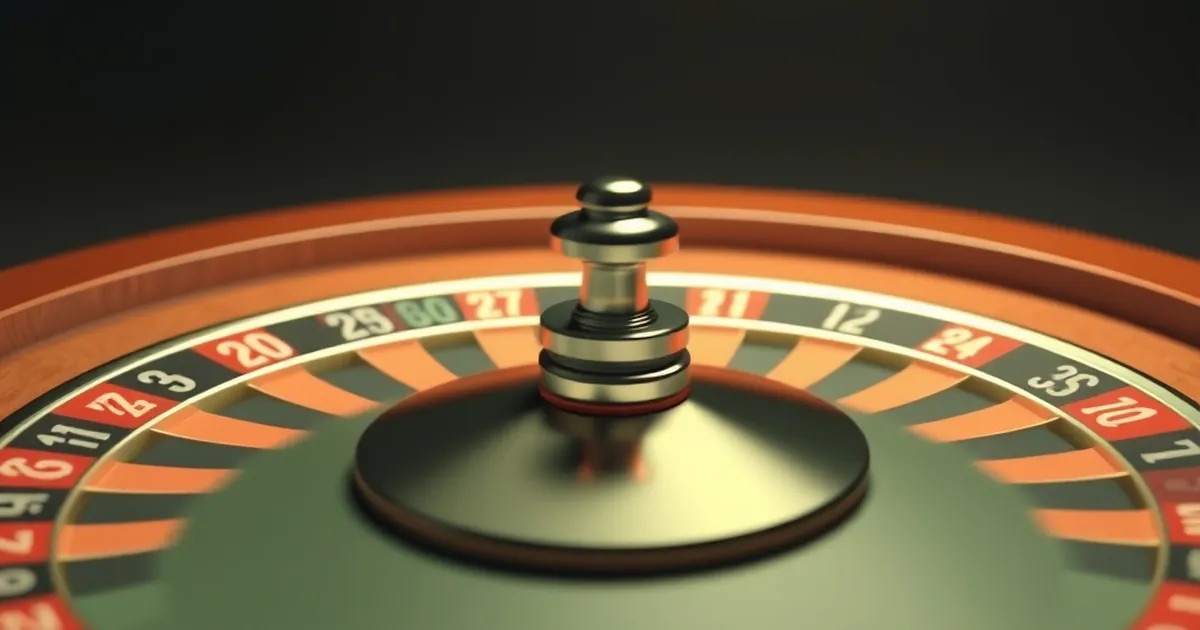
Roulette and slots share a fundamental mathematical truth: the house always wins over time. Yet the way their respective edges express themselves across a short session creates a deceptive asymmetry. Low-stakes roulette, particularly on even-money bets, allows the house edge to masquerade as natural variance far more convincingly than a slot reel ever can.
The Pace Problem: Spins Versus Reels
The primary mechanism is speed. A live roulette wheel averages around 30 to 40 spins per hour, depending on the dealer and table limits. An online slot, by contrast, can cycle through 400 to 600 spins in the same sixty minutes. This difference in exposure matters because the house edge is a percentage of total turnover, not a fixed fee per visit.
Consider a £1 bet on red at European roulette. Over 37 spins, the expected loss is roughly 97 pence, but the actual result will almost always be a win or loss far larger than that figure due to standard deviation. You can sit at a £5 minimum roulette table for an hour, bet on red every spin, and walk away up £50 or down £50, feeling the game is fair or lucky. The 2.7% house edge is buried under the noise of short-term probability.
On a slot with 96% RTP, the same £1 stake over 500 spins creates an expected loss of £20. But the slot’s volatility means you rarely see a smooth progression. You hit a dead run of 30 blanks, then a bonus that pays 40x, then another dry spell. The house edge is still 4%, but the player’s experience is dominated by the dramatic swings, not the slow bleed.
The Anchor of Even-Money Betting
The illusion is strongest on the outside bets. Red/black, odd/even, and high/low offer a near-50% win probability (18/37 in European roulette). A player who wins five out of eight spins feels like they are beating the game. They are not; they are simply experiencing a natural cluster that probability permits. The casino’s 2.7% edge is only revealed over thousands of spins, which most casual players never log.
Slots offer no such psychological shelter. A slot’s paytable is opaque and its results are binary only in the sense of win or lose, but the win amounts vary wildly. A 50p spin that returns 2p feels like a loss, even if the game counts it as a win. The house edge is baked into every spin’s distribution, not just the frequency of red versus black.
The UKGC and Session Limits
The UK Gambling Commission’s 2024 consultation on stake limits for online slots (capped at £5 per spin for players aged 25 and over, £2 for those 18-24) indirectly highlights this difference. Roulette has no such per-spin cap because its edge is considered lower-risk per unit of time. The regulator implicitly acknowledges that a £5 roulette spin is less dangerous than a £5 slot spin, precisely because the roulette wheel exposes the player to fewer decisions per hour.
The Psychological Trap
Low-stakes roulette invites a player to believe they are playing a game of near-equal odds. The small edge feels like a trivial tax. Slots, with their 85-97% RTP range, wear their edge more openly, especially when players track their balance against the spin counter. A roulette player can lose twenty consecutive bets on black and blame bad luck. A slot player who loses twenty consecutive spins is more likely to suspect the machine is rigged, which at least prompts them to stop.
What This Means for the Player
The practical takeaway is not that roulette is fairer. It is that roulette’s house edge hides better because the game’s low frequency and binary outcomes let variance do the camouflage. A player who budgets £50 for an hour of roulette may leave feeling they had a fair shot. The same £50 on a slot can vanish in under ten minutes, making the house edge feel predatory rather than invisible.
Is a hidden edge worse than an obvious one? That depends on whether you prefer to lose slowly and not notice, or lose quickly and know why.